
Future-orientated and with a high level of quality awareness
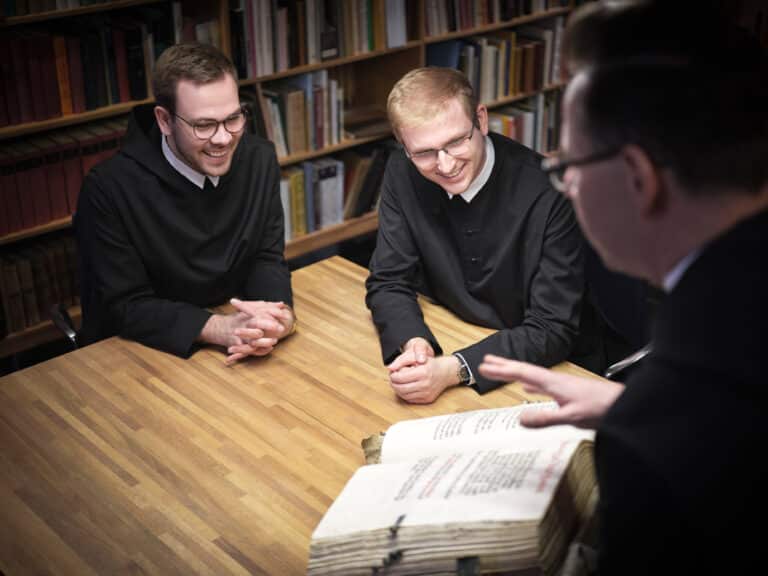
The scientific department of Admont Abbey works with a high level of quality awareness to fulfil its mission of curating the archive and library collections in a future-oriented manner and providing qualified scientific information. Over 120 enquiries were received in 2025. Supporting researchers with a wide variety of requests keeps the team busy all year round. The spectrum ranges from house history dissertations to information on genealogical research and regional history to the provision of digitised data.
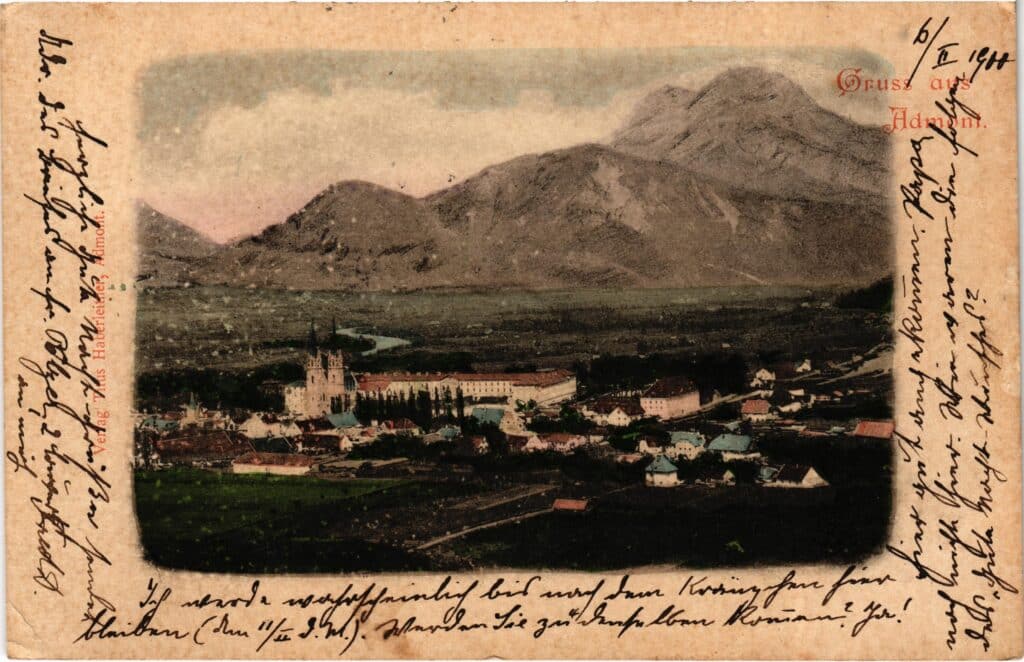
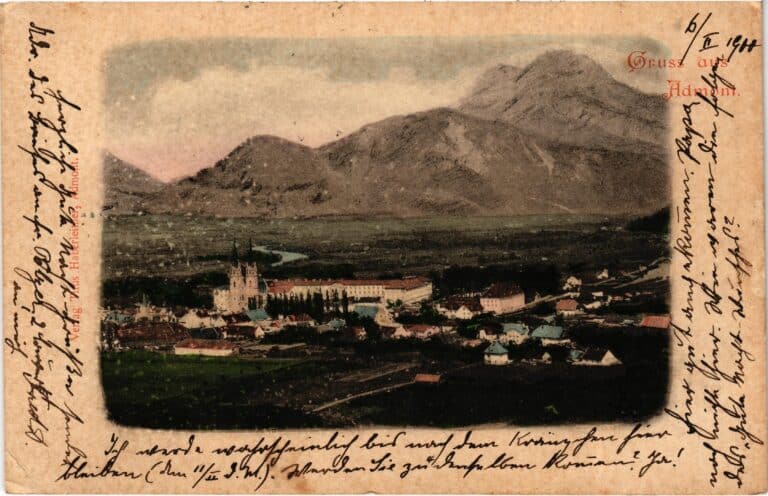
In order to be able to provide even more specific information, work is being carried out on the ongoing cataloguing of the holdings. In the area of the Abbey Archives, files are constantly being viewed, organised, professionally packed and stored for conservation purposes. All previously catalogued files can be found and ordered by users via the archive information system Archivis Pro. Cataloguing work has also continued in the in-house collections: The stock of digitised postcards recorded in the database now totals around 26,000 individual items with unique views from Admont, Austria and all over the world.
The (largely handwritten) music holdings have also been made accessible to a wide audience of musicologists in recent years as part of a project that is nearing completion: thanks to the fact that they can be found in the international music database RISM, the number of enquiries about the remarkable music holdings of the Abbey Archive is increasing. Dr Ikarus Kaiser, musicologist at Wilhering Abbey, was responsible for the technical handling of the project. He also acts as an interface for communication with the musically interested public and will provide insights into the holdings at a workshop on 6 February 2026.
Another long-term project that is nearing completion is the database „Höfe in Admonter Urbaren“. By linking geo-referenced data with historical records from the monastery archives, it is possible to trace the chronology of ownership of farms and estates in large parts of the Liezen district. Thanks to years of research by Dr Josef Hasitschka and technical expertise and advice from Klosterneuburg Abbey, it was possible to locate the farms recorded in land registers from various centuries and depict them on a modern map.
Users can call up all available historical information on properties of their choice with a single click. This facilitates access to highly sought-after information from the abbey archive. In order to give researchers access to the original sources, all relevant original documents have been digitised. The database will go online in spring 2026. The academic evening of 2026, which is traditionally held on 15 June, the Solemnity of St Gebhard, will be dedicated to this project and provide all interested parties with an insight into the possible uses and background to the urbarium database.
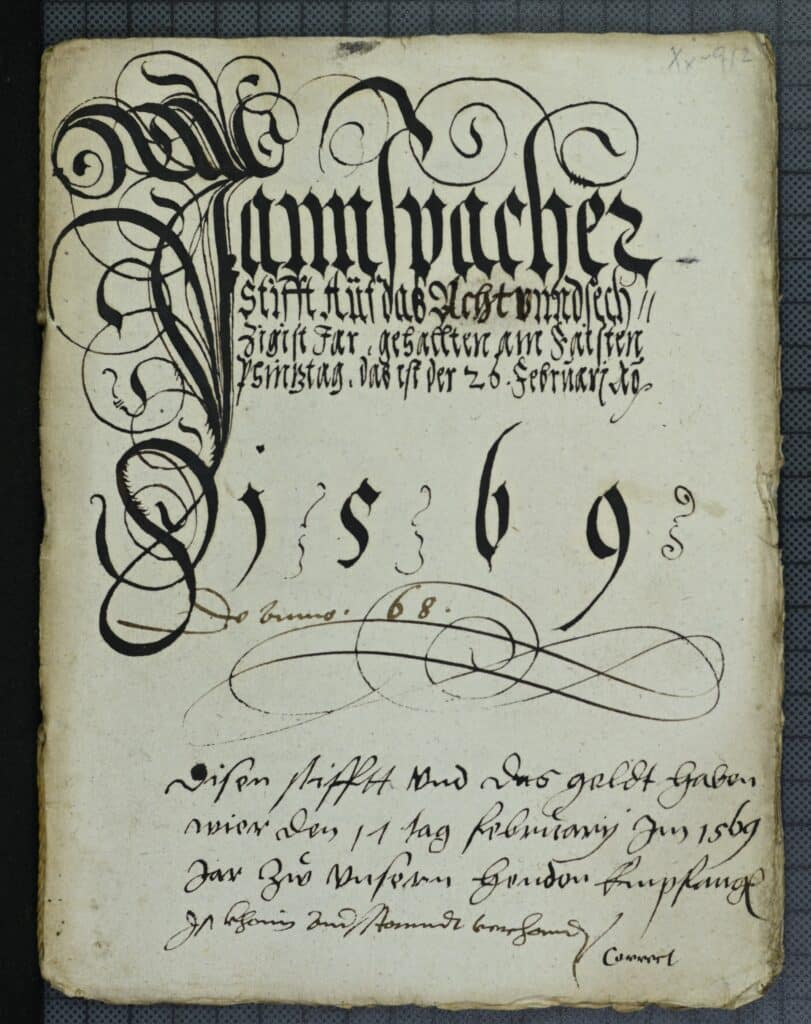
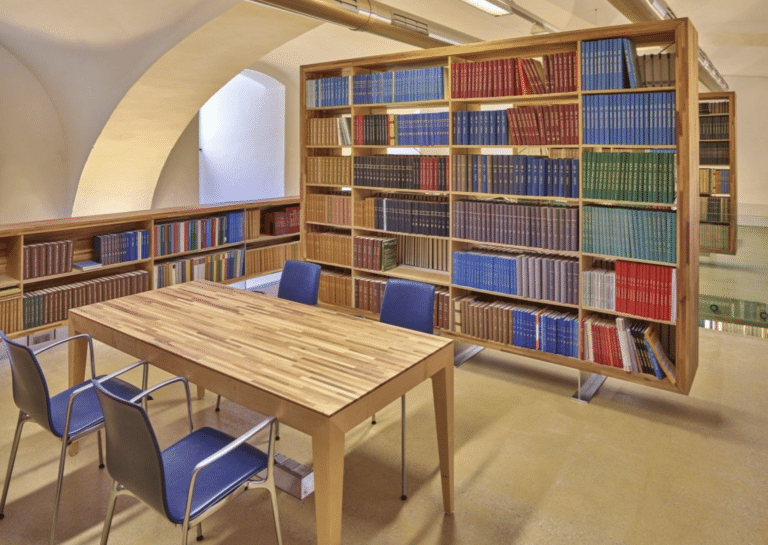
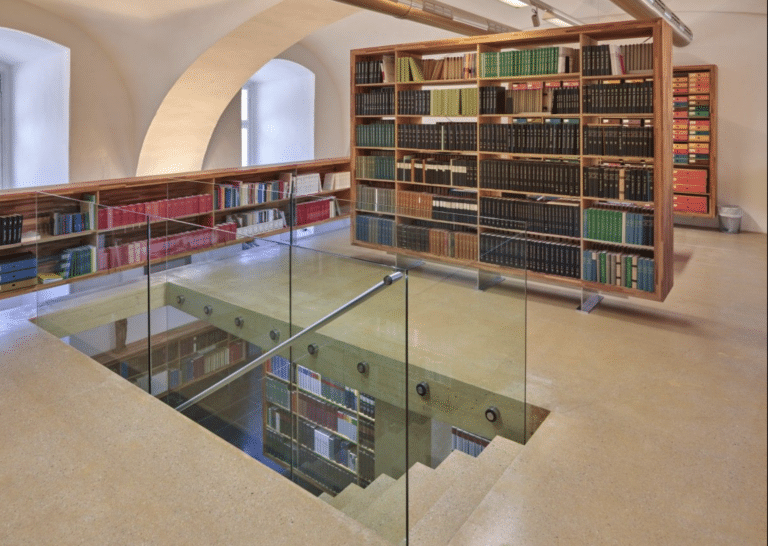
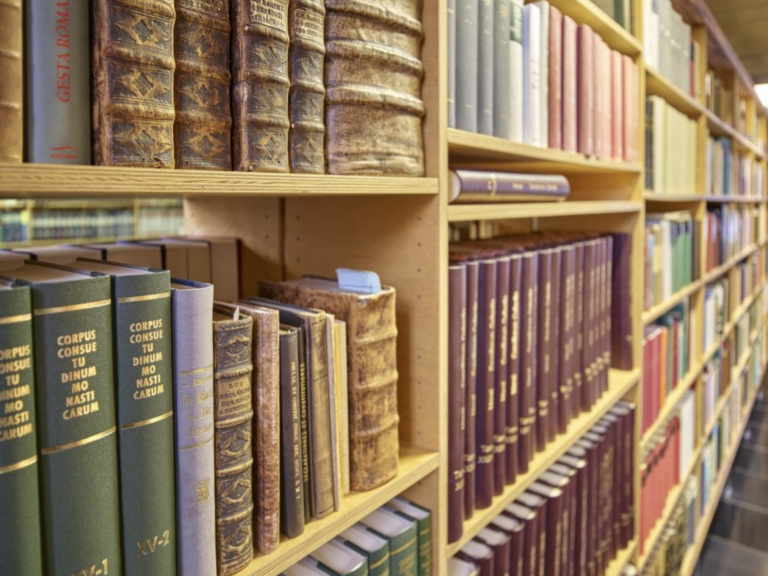
In the area of library holdings, the current focus is on cataloguing the printed works in the reading room and stacks. The successive organisation and indexing of the works in the reading room enables researchers to make uncomplicated use of academic secondary literature. The processing, sorting and organising of those areas in the library stacks that have been used for decades to store material that has not yet been recorded (donations and bequests, unorganised brochures, offprints and periodicals) is an important concern both in terms of space and resource-saving storage as well as conservation considerations: The storage space that has been freed up can be used for those printed works that have no place in the Baroque library but require special climatic conditions due to their age. The objective of making the entire book collection of the Admont library searchable via a common catalogue system was achieved by merging the heterogeneous lists and indexes.
New works are constantly being added to the existing „complete catalogue“ and old catalogues - such as the OCR-scanned old card catalogue - are being integrated. In the summer of 2025, the team was supported by Lea Tritscher as an intern in the preparation and cleaning of this data, who diligently pursued this work. This central catalogue system makes work considerably easier for researchers whose enquiries relate to specific keywords or subject areas. Once the catalogue has been completed, it will be possible to search the library's holdings via an online platform. The fact that the title pages of all 70,000 books in the baroque library hall have been digitised also provides an excellent starting point for the future use of AI solutions for text capture. The ongoing IPM (Integrated Pest Monitoring) programme, which is also managed by the archive team for the entire museum area, ensures the continued existence of the library holdings.
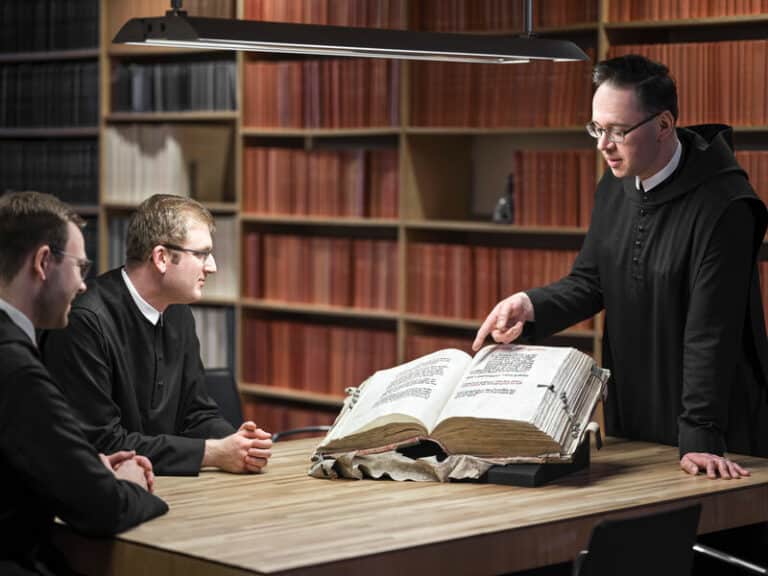
A significant part of the work on the scientific mission traditionally involves support for research projects on unique artefacts and manuscripts. Particularly noteworthy is the cooperation with the team of Prof Eva Veselovska from the Slovak Academy of Sciences, which has undertaken a review of the fragment collection and recorded the Admont music fragments in the international database „AustriaManus“. In addition, the history of the Admont library and its manuscripts is currently the subject of two individual university projects in the USA and Australia, which were supported by our team.
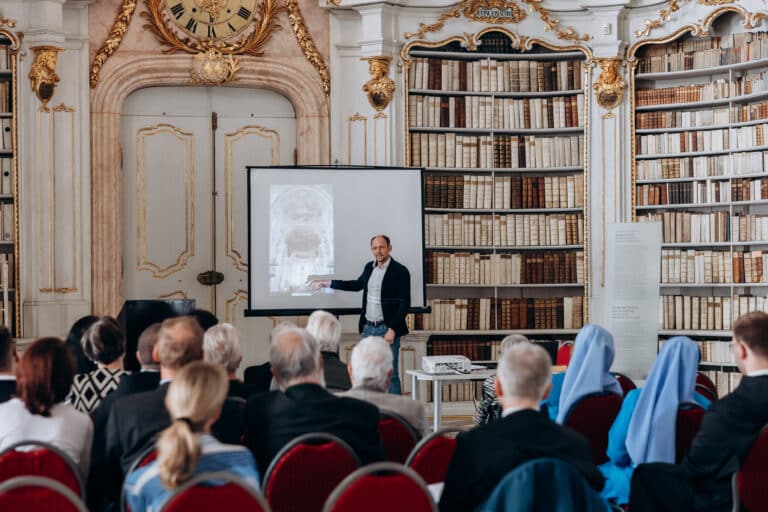
Numerous activities also relate to mediation and public relations work. The highlight of 2025 was the academic evening on 16 June. As part of the presentation of the completed long-term manuscript digitisation project, top-class lectures were given on digital cultural heritage and the role of monastic libraries in the tradition(s) of knowledge. As usual, guided tours were also offered for an interested audience, including groups of pupils from the Stiftsgymnasium. For the first time, an educational format was offered under the title „Blick ins Buch“ ("A look inside the book"), which is intended to present the Abbey Library's book collections in a topic-orientated and low-threshold manner.
On 29 March, the focus was on scientific curiosities, primarily from the medical and natural science departments, while on 25 July, regional and tourism history was highlighted, with a focus on the Abbey Library as an attraction and the mountains as a place of longing. In 2026, there will once again be the opportunity to „look inside the book“: On 10 April 2026, a cross-section of the history of the Admont book collection will be presented. Admission to all events organised by the Abbey Archive and library is free of charge.
The presence of Admont-related research topics in scientific publications and conferences is also ensured on an ongoing basis, most recently with an article on the monastic theatre tradition in the annual volume of „Studien und Mitteilungen des Benediktinerordens“.
There are plans to strengthen the Abbey Archive and Library team in 2026 - interested parties are cordially invited to register at archiv@stiftadmont.at to report.